

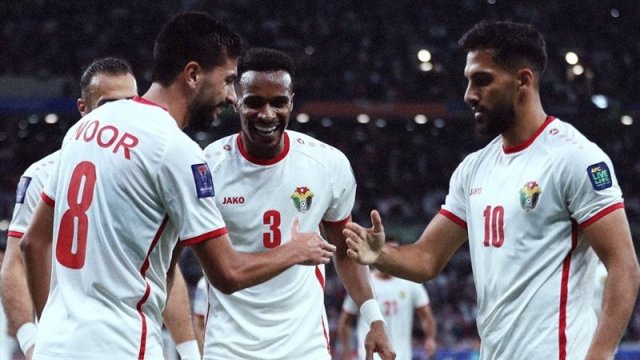
A circulating media report in Jordan has reignited discussions about the future of national team players, as it highlighted a sense of bewilderment among some players due to the absence of professional offers from major European clubs, despite the impressive performances showcased by the "Nashama" in the World Cup finals.
While the World Cup is the biggest stage for showcasing talent, excelling in this tournament does not necessarily guarantee a direct transfer to top clubs. Transfer decisions are subject to a complex system that intertwines technical, economic, and marketing considerations.
Observers believe that excelling in a short tournament, no matter how significant, is not enough to persuade major clubs to make new signings. Club managements typically rely on monitoring players over extended periods, analyzing their performance through data and statistics that span entire seasons, rather than depending on a limited number of matches in a single tournament.
The level of the league in which a player competes is a crucial factor in contract decisions. European clubs often lean towards players who consistently perform in strong competitions, viewing this as a more accurate indicator of their ability to adapt to a high level of competition.
It's not just about the technical side; financial considerations strongly influence the evaluation process. The player's market value and the duration of their contract with their club directly impact any potential deal, especially if the financial demands are high or do not align with the interested club's valuation.
Player agents play a crucial role in facilitating professional opportunities, as their network of relationships with European clubs opens negotiation channels and enhances transfer prospects, even when the skill levels of multiple players are similar.
Many experiences confirm that transfers to major clubs do not always happen immediately after the World Cup. Instead, they may occur later as a result of the player continuing to deliver strong performances with their club and national team, which increases their value in the transfer market over time.
In any case, the absence of major European offers following the World Cup does not diminish the achievement of the Jordanian national team or the performance of its players. Continuity in development and maintaining technical level remain the most important factors to attract the interest of clubs in the upcoming seasons.